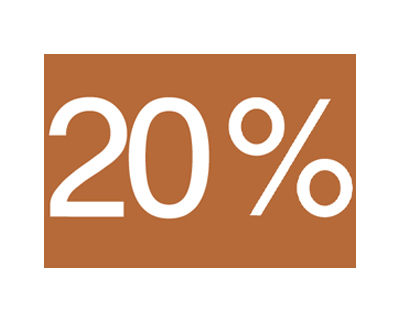
Real Living Wage to increase by 10%


The Real Living Wage is set to increase by 10%, the Living Wage Foundation has announced.

The rate will rise to £12 an hour across the UK and £13.15 an hour in London. The increase will affect over 460,000 people working for 14,000 Real Living Wage employers across the UK.

Unlike the National Living Wage (NLW), the Real Living Wage is independently calculated based on rising living costs and applies to everyone over 18.

Katherine Chapman, Living Wage Foundation Director, said:

‘As inflation eases, we cannot forget that low paid workers remain at the sharp end of the cost-of-living crisis. Low paid workers continue to struggle with stubbornly high prices because they spend a larger share of their budget on food and energy.

‘During these tough economic times, it is heartening that record numbers of employers are signing up to join the Living Wage movement, protecting everyone who works for them – including cleaners – from rising prices and seeing the benefits of a more motivated and engaged workforce.’

Internet link: Living Wage Foundation website

Rate of inflation falls as interest rates held


UK inflation fell to a two-year low while the base rate of interest was unchanged by the Bank of England for the second month in a row.

The Office for National Statistics (ONS) found that the UK’s rate of Consumer Price Index inflation fell to 4.6% from 6.7% in September.

The ONS found that a small reduction in the energy price cap helped to bring the inflation rate down. According to the data, electricity costs are down 15.6% compared to a year earlier, whilst gas costs are down by 31%.

Meanwhile, the Monetary Policy Committee (MPC) held the base interest rate at 5.25%.

The latest decision marks the second time in a row that interest rates have been held at 5.25% – their highest level in 15 years.

David Bharier, Head of Research at the British Chambers of Commerce (BCC), said:

‘The decision to again hold the interest rate at 5.25% will allay some concerns of the businesses we speak to that are unable to stomach further rises.

‘Our research has shown that interest rates have grown as a key issue among companies. This is especially true for smaller firms and those in consumer facing sectors who have seen rising borrowing costs and decreased customer demand.’

Internet link: ONS website Bank of England website BCC website

Chancellor makes Full Expensing permanent in Autumn Statement


Chancellor Jeremy Hunt used his Autumn Statement to make Full Expensing permanent for those businesses investing in IT equipment, plant and machinery.

The Chancellor said he was aiming to stimulate economic growth and highlighted 110 measures for businesses in the Statement.

Full Expensing was first announced in the March Budget and was scheduled to last for three years. The rules allow a 100% write-off on qualifying expenditure on most plant and machinery (excluding cars) as long as it is unused and not second-hand.

Mr Hunt has now made it permanent and said it represents the ‘largest business tax cut in modern British history‘, worth £11 billion per annum.

The Chancellor also extended the tax reliefs and incentives for Freeports and the Investment Zones programme from five to ten years. In addition, he announced three advanced manufacturing Investment Zones, which will be established in Greater Manchester, the East Midlands and the West Midlands.

There is also a business rates support package worth £4.3 billion over the next five years to help high streets and protect small businesses. This includes a rollover of the 75% retail, hospitality and leisure relief.

Rain Newton-Smith, Chief Executive of the Confederation of British Industry (CBI), said:

‘Making full capital expensing a permanent feature of the tax system can be transformational for accelerating growth and improving living standards in the long-term. Helping firms to unleash pent-up investment is critical to getting momentum into the economy.’

Internet link: GOV.UK CBI website

Budget Autumn Statement 2023


Following on from the chancellors Autumn Statement November 2023 we have now compiled a summary of the changes introduced and a summary of the new tax rates and changes.

If you have any queries or want to know how these changes impact you or your business please contact us on:

info@mcgintydemack.co.uk or call 0800 1223 6633 and one of the team will be happy to help you.

Hybrid and remote working here to stay


A large majority of UK business leaders plan to offer employees remote and hybrid working in the long-term, according to the Institute of Directors (IoD).

A survey conducted by the IoD found that 84% of business leaders polled plan to provide office-based staff members with some degree of remote working. The IoD’s survey was conducted between 13 and 30 September 2023 and received 710 responses.

13% of business leaders stated they plan to offer full remote working in the long-term, whilst 18% said they will allow employees to choose how they work.

Alexandra Hall-Chen, Principal Policy Adviser for Employment at the IoD, said:

‘Our research shows that, for a clear majority of businesses, remote and hybrid working are here to stay.

‘Against a backdrop of acute skills and labour shortages in the UK, flexible working is a valuable tool for businesses seeking to attract and retain talented staff.

‘Good flexible working policies can also support groups more likely to fall out of the workforce, such as parents and disabled people, to thrive in the workplace.

‘Anecdotally, we have found that some businesses are moving away from a model marked by full flexibility to a hybrid approach, due to a desire to bring staff together to facilitate innovation and team cohesion, but very few are removing their remote working offer entirely.’

Internet link: IoD website

x