Update on Structures and Buildings Allowance


Chancellor Philip Hammond delivered the Spring Statement on Wednesday 13 March 2019 amidst all the Brexit debates.

In his speech the Chancellor provided an update on the economy and responded to the Office for Budget Responsibility forecasts. In addition he launched consultations on various aspects of the tax system together with updates on earlier consultations.

One area subject to consultation is the Structures and Buildings Allowance (SBA). The SBA gives relief for expenditure on certain structures and buildings. The allowance is available for new structures and buildings intended for commercial use, and the improvement of existing structures and buildings. The SBA will be also available on the cost of converting or renovating existing premises to qualifying use. Relief is limited to the original cost of construction or renovation and given across a fixed 50-year period, at an annual flat rate of 2% regardless of changes in ownership.

Only certain expenditure will qualify. The structures or buildings must be brought into use for qualifying activities. These include trades, professions or vocations and certain UK or overseas property businesses – essentially commercial property lettings.

Relief will be given on eligible construction costs incurred on or after 29 October 2018. Where a contract for the physical construction work is entered into before this date, relief is not available. The consultation on draft legislation is open until 24 April 2019.

Internet links: WMS | Consultation

Call for tax on social media businesses


A group of MPs has called on the government to tax the profits of social media businesses.

The All Party Parliamentary Group (APPG) on Social Media and Young People’s Mental Health and Wellbeing recently published a report which outlined the impact of social media on the health of young people.

The APPG has suggested creating a Social Media Health Alliance, which would be funded by a 0.5% tax on the profits of social media companies. MPs hope that the money would be used to fund research and help ‘draw up clearer guidance’ on the impact of social media on health and wellbeing.

Internet link: Royal Society for Public Health

Changes to income tax for 2019/20


The new tax year brings changes to income tax bands and allowances.

The personal allowance is £11,850 for 2018/19 and increases to £12,500 for 2019/20. There is a reduction in the personal allowance for those with ‘adjusted net income’ over £100,000. The reduction is £1 for every £2 of income above £100,000. So for 2018/19 there is no personal allowance where adjusted net income exceeds £123,700. For 2019/20 there is no personal allowance available where adjusted net income exceeds £125,000.

The marriage allowance permits certain couples, where neither pays tax at more than the basic rate, to transfer 10% of their personal allowance to their spouse or civil partner.

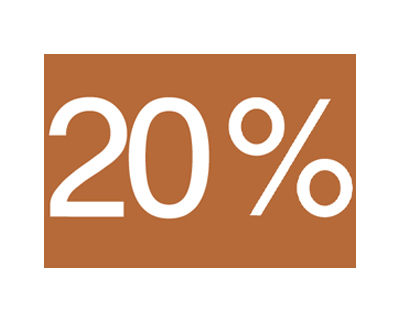
The basic rate of tax is 20%. In 2018/19 the band of income taxable at this rate is £34,500 so that the threshold at which the 40% band applies is £46,350 for those who are entitled to the full personal allowance. In 2019/20 the basic rate band increases to £37,500 so that the threshold at which the 40% band applies is £50,000 for those who are entitled to the full personal allowance.

Individuals pay tax at 45% on their income over £150,000.

Scottish residents

The tax on income (other than savings and dividend income) is different for taxpayers who are resident in Scotland to taxpayers resident elsewhere in the UK. The Scottish income tax rates and bands apply to income such as employment income, self-employed trade profits and property income.

In 2018/19 and 2019/20 there are five income tax rates which range between 19% and 46%. Scottish taxpayers are entitled to the same personal allowance as individuals in the rest of the UK. The two higher rates are 41% and 46% rather than the 40% and 45% rates that apply to such income for other UK residents. For both 2018/19 and 2019/20, the threshold at which the 41% band applies is £43,430 for those who are entitled to the full personal allowance.

Welsh residents

From April 2019, the Welsh Government has the right to vary the rates of income tax payable by Welsh taxpayers. The UK government has reduced each of the three rates of income tax paid by Welsh taxpayers by 10 pence. The Welsh Government has set the Welsh rate of income tax at 10 pence which will be added to the reduced rates. This means the tax payable by Welsh taxpayers continues to be the same as that payable by English and Northern Irish taxpayers.

Internet link: GOV.UK | GOV.SCOT income tax | GOV.WALES income tax

HMRC wins disguised remuneration avoidance case


HMRC has won a legal case over a contractor loan scheme endorsed by Hyrax Resourcing Ltd. As a result, HMRC will now be able to collect more than £40 million in unpaid taxes. 

The scheme in question was a disguised remuneration avoidance scheme, which paid users in loans, rather than salaries, to avoid paying income tax and national insurance contributions on earnings.

Hyrax Resourcing Ltd will now be required to disclose details of the tax avoidance scheme, including the names and addresses of 1,180 individuals who used it. Failure to provide the relevant information could result in Hyrax Resourcing Ltd becoming liable for substantial penalties.

Financial Secretary to the Treasury, Mel Stride MP, said:

‘HMRC is cracking down on the unscrupulous promoters who sell these highly contrived tax avoidance loan schemes.

‘Promoters need to take note of this decision and make sure they contact HMRC urgently about schemes they haven’t yet disclosed.’

Internet link: HMRC news

MTD for VAT


HMRC is phasing in its landmark Making Tax Digital (MTD) regime, which will ultimately require taxpayers to move to a fully digital tax system. Under the new rules, businesses with a taxable turnover above the VAT threshold (currently £85,000) must keep digital records for VAT purposes and provide their VAT return information to HMRC using MTD functional compatible software.

The new rules have effect from 1 April 2019 where a taxpayer has a ‘prescribed accounting period’ which begins on that date, or otherwise from the first day of a taxpayer’s first prescribed accounting period beginning after 1 April 2019. For some VAT-registered businesses with more complex requirements the rules will not have effect until 1 October 2019. Included in the deferred start date category are VAT divisions, VAT groups and businesses using the annual accounting scheme.

The government has confirmed that a light touch approach to penalties will be taken in the first year of implementation. Advising that where businesses are doing their best to comply, no filing or record keeping penalties will be issued as the focus will be on supporting businesses to transition to MTD. The government has confirmed that it will not be mandating MTD for any new taxes in 2020.

Figures published by HMRC show that almost 1.2 million businesses are affected by MTD for VAT.

Financial Secretary to the Treasury, Mel Stride MP, said:

‘In a world where businesses are already banking, paying bills and shopping online, it is important that the tax system moves into the 21st century.’

Internet link:GOV.UK

x