The VAT reverse charge


The reverse charge represents part of a government clampdown on VAT fraud. Large amounts of VAT are lost through ‘missing trader’ fraud. As part of this type of fraud, VAT is charged by a supplier, who then disappears, along with the output tax. The VAT is thus lost to HMRC. Construction is considered a particularly high-risk sector because of the potential to make supplies with minimal input tax but considerable output tax.

The reverse charge does not change the VAT liability: it changes the way that VAT is accounted for. From 1 March 2021 the recipient of the services, rather than the supplier, will account for VAT on specified building and construction services. This is called a ‘reverse charge’.

The reverse charge is a business-to-business charge, applying to VAT-registered businesses where payments are required to be reported through the Construction Industry Scheme (CIS). It will be used through the CIS supply chain, up to the point where the recipient is no longer a business making supplies of specified construction services. The rules refer to this as the ‘end user’.

Broadly then, the reverse charge means that a contractor receiving a supply of specified construction services has to account for the output VAT due – rather than the subcontractor supplying the services. The contractor then also has to deduct the VAT due on the supply as input VAT, subject to the normal rules. In most cases, no net tax on the transaction will be payable to HMRC.

The charge affects only supplies at standard or reduced rates where payments are required to be reported via CIS and not to:

  • zero-rated supplies;
  • services supplied to ‘end users’ or ‘intermediary suppliers’.

Under the scheme a VAT-registered business, receiving a supply of specified services from another VAT-registered business, for onward sale, on or after 1 October 2020:

  • should account for the output VAT on supplies received through its VAT return
  • does not pay the output VAT to its supplier on supplies received from them
  • can reclaim the VAT on supplies received as input tax, subject to normal VAT rules.

The supplier should issue a VAT invoice, indicating the supplies are subject to the reverse charge.

An end user should notify its end user status, so the supplier can charge VAT in the usual way.

Internet links: Gov.uk guidance gov.uk technical guidance

Ministers announce new grants for businesses affected by local lockdowns


Businesses in England that are required to shut because of local interventions will now be able to claim up to £1,500 per property every three weeks.

To be eligible for the grant, a business must have been required to close due to local COVID-19 restrictions. The largest businesses will receive £1,500 every three weeks they are required to close. Smaller businesses will receive £1,000.

Payments are triggered by a national decision to close businesses in a high incidence area. Each payment will be made for a three-week lockdown period. Each new three week lockdown period triggers an additional payment.

Internet link: gov.uk news

New trade arrangements with the EU from 1 January 2021


HMRC has sent letters to VAT-registered businesses in Great Britain trading with the EU, or the EU and the rest of the world. They explain what businesses need to do to prepare for new processes for moving goods between Great Britain and the EU from 1 January 2021.

Measures explained in the letter include:

  • making sure they have a UK Economic Operator Registration and Identification (EORI) number
  • deciding how they will make customs declarations
  • checking if their imported goods are eligible for staged import controls.

Internet link: gov.uk letters

Winter Economy Plan support for the self-employed


As part of the Winter Economy Plan the Self-Employment Income Support Scheme (SEISS) will be extended under the name SEISS Grant Extension. The grant:

  • will be limited to self-employed individuals who are currently eligible for the SEISS, and
  • will be available to individuals who are actively continuing to trade but are facing reduced demand due to COVID-19.

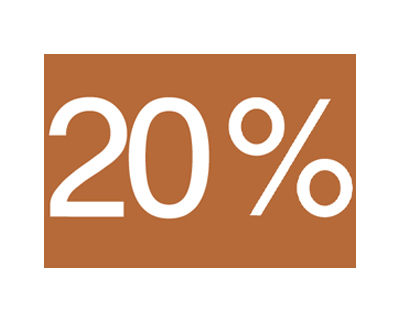
The scheme will last for six months, from November 2020 to April 2021, and will consist of two grants. The first grant will cover a three-month period from the start of November until the end of January. This initial grant will cover 20% of average monthly trading profits, paid out in a single instalment covering three months’ worth of profits, and capped at £1,875 in total. The second grant will cover a three-month period from the start of February until the end of April. The government will review the level of the second grant and set this in due course.

The amount of the first grant under the SEISS grant extension will be significantly less than the grants made under the SEISS. The initial SEISS grant was based on 80% of profits (capped at £7,500) and the second SEISS grant was based on 70% of profits (capped at £6,570).

Internet link: Gov.uk factsheet

Job Support Scheme


The existing job support scheme, the furlough scheme, comes to an end on 31 October. As part of the Winter Economy Plan the government announced it will be introducing a new Job Support Scheme from 1 November 2020.

For employers to participate in the scheme:

  • employees will need to work a minimum of 33% of their usual hours
  • for every hour not worked, the employer and the government will each pay one third of the employee’s usual pay
  • the government contribution will be capped at £697.92 per month.

Employees using the scheme will receive at least 77% of their pay, where the government contribution has not been capped. The employer will be reimbursed in arrears for the government contribution. The employee must not be on a redundancy notice.

The scheme will run for six months from 1 November 2020 and is open to all employers with a UK bank account and a UK PAYE scheme. It will be open to such businesses even if they have not previously used the furlough scheme.

All small and medium-sized enterprises will be eligible. Large businesses will be required to demonstrate that their business has been adversely affected by COVID-19. The government also expects that large employers will not be making capital distributions, such as dividends, while using the scheme.

The Job Support Scheme will sit alongside the Jobs Retention Bonus which was announced by the Chancellor in July. The Bonus will provide a one-off payment of £1,000 to UK employers for every furloughed employee who remains continuously employed through to the end of January 2021 and who earns at least £520 a month on average between 1 November 2020 and 31 January 2021. Businesses can benefit from both schemes.

Internet link: Gov.uk Factsheet

x